


Free Initial Consultation on Injury Cases 704-377-5242
How North Carolina Landowners Can Challenge a Low Eminent Domain Offer

Property owners throughout North Carolina are often contacted by those with eminent domain power every year because their land is needed to widen roads, build utilities, create transportation centers, or provide for other public uses. While these projects can be beneficial to the community, that does not mean your rights as a landowner are suddenly diminished. You are entitled to be fairly compensated if your property is taken. It’s crucial to know how North Carolina landowners can challenge a low eminent domain offer.
About DAS Law Group
The attorneys at DAS Law Group have worked with clients in Charlotte and throughout North Carolina on property disputes, real estate litigation, and condemnation cases for many years. Our lawyers have collectively practiced law for over 100 years. We are familiar with how courts in Mecklenburg County and all over North Carolina approach various kinds of condemnation issues.
Through handling complex real estate disputes locally, our attorneys have gained a thorough understanding of North Carolina real property law, which we apply to help our residents and business owners navigate serious legal disputes.
Understanding North Carolina Eminent Domain Laws
Eminent domain refers to the government’s power to take private property for public use. In exchange, the property owner is entitled to compensation based on the value of their land. North Carolina’s eminent domain statute is codified in Chapter 40A of the North Carolina General Statutes. This law specifies who has eminent domain power and the procedures those authorities must follow to take private property for public use.
Landowners often believe they have no choice but to accept the government’s first offer. In North Carolina commercial condemnation laws typically allow a property owner to seek additional compensation if they feel the land has been valued too low.
Why Eminent Domain Offers May Be Too Low
The North Carolina Department of Transportation issued nearly 500 contracts totaling over $3.1 billion for construction and maintenance projects throughout the state in 2025. When transportation projects reach a significant scale, they commonly necessitate acquiring a right-of-way, which can subsequently affect private landowners statewide.
Government agencies typically order an appraisal of the property to determine how much they should pay for the land. While the appraisers used by these entities are often qualified professionals, they may not consider every issue that could impact value. Here are some common reasons an owner may receive a low offer:
- Unique attributes of the property were not considered.
- Future development rights were not analyzed.
- Business damages were not considered.
- Limitations on access to the property were not analyzed.
- Damage to the remainder after a partial taking was not calculated.
For instance, there may be commercial property near prime Charlotte corridors like South Blvd., Wilkinson Blvd., or the I-485 loop. It may have great developable land potential that cannot be identified with a one-standard valuation process. Also, there may be a partial taking of parking, visibility, or access that causes damages beyond the land that was actually taken.
Common Ways to Challenge Low Offers
Obtaining their own appraisal is one way property owners can challenge a low offer. Getting a second opinion could uncover crucial details that the condemning authority overlooked during their appraisal.
Another issue to consider is whether the project creates any damages in addition to the loss of the property being taken. If part of your land is being acquired, just compensation may include the fair market value of the land being seized and the decrease in value to the remaining property.
Owners should also consider whether the appraisal failed to account for the property’s highest and most beneficial use. Perhaps the land is being used for a specific purpose now, but it would be worth significantly more if it were to be repurposed for residential, commercial, or mixed-use development.
Hire an Eminent Domain Lawyer
Some property owners decide to hire an eminent domain lawyer to represent them during a condemnation eminent domain case. Valuation issues can be complex, requiring professional experience and knowledge. An eminent domain attorney can determine if an offer is fair and whether additional compensation is available.
Eminent domain cases involving local properties may be litigated in the local courts should compensation amounts be disputed. The main courthouse in Mecklenburg County is the Mecklenburg County Courthouse, 832 East Fourth Street, Charlotte, NC 28202.
FAQs
Can the Government or Condemning Authority Take My Land If I Don’t Agree to the Offer?
Certain government agencies and others that hold eminent domain power in North Carolina can seize property for public use, even if the owner does not agree to the price offered. However, you don’t give up your rights by simply refusing an offer. Property owners can dispute the compensation amount throughout the legal process. They can also provide evidence to justify a higher value.
May I Have to Move Right Away After Getting an Eminent Domain Notice?
No, you may not necessarily have to move right away after getting an eminent domain notice. Timeframes may differ from project to project. Also, negotiations and any resulting litigation can affect when you may have to move. It is important for property owners to read all notices and meet deadlines. This lets them know what is required of them and when during an eminent domain case.
Can Eminent Domain Be Used to Take Vacant Land?
Yes, eminent domain can be used to take:
- Vacant land
- Undeveloped property
- Farmland
- Commercial real estate
- Residential real estate
Just because a property owner doesn’t have a structure built on their parcel of land, it doesn’t mean they don’t need it. These kinds of land acquisitions are frequently necessary for transportation, utility, and public projects.
What Happens If Only a Portion of My Land Is Being Acquired?
When only a portion of a property is being acquired, the project may have an impact on the land not being acquired. Such impact could include access, visibility, drainage, parking, or development potential. Depending on the circumstances, many owners consider the effects of the project on the usefulness and value of the remainder.
Contact DAS Law Group Today
With growth continuing to occur in North Carolina, many property owners may be faced with eminent domain projects. Taking the time to properly evaluate an offer can allow property owners to make educated decisions. DAS Law Group can help with an eminent domain case. Contact us today for a consultation.

request your consultation
* We encourage prospective clients not to use AI research or drafting software in submitting their intake, as that can lead to unintended rejection via our spam filter.
"*" indicates required fields
our location
call us now 704-377-5242
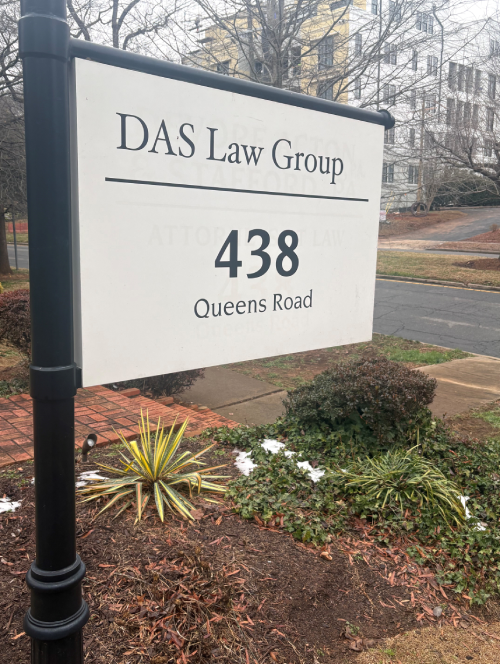
office location
DAS Law Group
438 Queens Road
Charlotte, NC 28207
fax:
704-332-2825
Copyright © 2026 DAS Group, LLP. All rights reserved. Disclaimer | Site Map | Privacy Policy
*Images are obtained under license from Canva and other third-party stock image providers, with attribution included where required.
Digital Marketing By 