


Free Initial Consultation on Injury Cases 704-377-5242
Can North Carolina Businesses Get Relocation Assistance After Eminent Domain?

An eminent domain notice can force a business decision that has little to do with whether you wanted to move.
The property may be acquired for a road, transit project, or other public use, leaving you to figure out where the business goes next and how much that transition will cost.
There is an important distinction to understand before negotiations get too far. North Carolina relocation assistance is separate from the compensation paid for the property itself.
For qualifying businesses, that assistance can cover certain expenses associated with moving and establishing operations at a new location.
That means the value of your property is only one part of the financial picture. The relocation process deserves its own review before you agree to a payment option or begin making moving arrangements.
DAS Law Group has decades of experience dealing with NCDOT and eminent domain matters. A consultation can help you examine the relocation benefits available to your business and understand the consequences of choosing one payment method over another.
Key Takeaways
- Relocation assistance is separate from the just compensation paid for the property.
- Eligible businesses can choose between reimbursement of actual expenses and a fixed payment.
- Once a payment option is selected, switching to the other method is not available.
- Reestablishment expenses at a new location are subject to a federal cap of $33,200 under the regulation discussed below.
- Lost profits and loss of goodwill are not covered relocation expenses.
- A relocation claim is subject to an 18-month filing period under the rules described below.
Before signing documents with NCDOT, it can be useful to have the relocation component reviewed separately from the property’s negotiated value.
Relocation Benefits Are Not Part of the Property Valuation
A condemnation can involve several different categories of compensation.
Just compensation addresses the value of the property being acquired. Relocation assistance addresses certain costs associated with leaving that property and establishing the business elsewhere.
North Carolina addresses relocation assistance through the North Carolina Uniform Relocation Assistance and Real Property Acquisition Policies Act, including N.C. Gen. Stat. § 133-5. The NCDOT also provides information concerning just compensation and relocation benefits.
For a business owner, keeping these categories separate matters during negotiations. Reaching an agreement about the property’s value does not mean the expenses associated with relocating the business have been addressed.
Which Businesses May Qualify for Relocation Assistance?
Eligibility can extend beyond property owners. A business leasing the property it occupies may qualify when it is displaced because of a public acquisition. The framework can also apply to farms and nonprofit organizations.
There are exceptions. The source material identifies several situations that may prevent a person or business from receiving certain relocation benefits, including:
- A business whose only activity is renting the property to others, for certain moving-expense categories.
- A person unlawfully occupying the property when the acquisition occurs.
- A person who moved onto the property after receiving notice of the acquisition for the purpose of obtaining relocation benefits.
The details of the acquisition and the business’s occupancy matter when determining eligibility. NCDOT’s Right of Way office can provide information about the agency’s process, but business owners may also want legal advice before making decisions that affect their available benefits.
You Have Two Relocation Payment Options
For a qualifying displaced business, NCDOT provides two basic approaches to calculating relocation assistance. The choice is significant because selecting one route means giving up the other.
The right comparison is not just about which option sounds easier. Your equipment, moving expenses, new-site improvements, and financial records can all affect how the two methods work for your business.
Reimbursement of Actual Expenses
Under the actual-expense approach, eligible moving expenses can be reimbursed when they are properly documented. The business may also qualify for reestablishment expenses associated with preparing the replacement location.
The source material identifies a $33,200 federal cap for reestablishment expenses under 49 C.F.R. § 24.304 and notes that this amount increased in 2024, while an older NCDOT brochure still lists the previous $25,000 figure.
The federal Uniform Relocation Assistance Act provides the federal framework.
This option can be significant for businesses facing substantial physical moving expenses, machinery relocation, or work required to make the new premises operational.
The Fixed Payment Option
Instead of documenting individual expenses, an eligible business may be able to elect a fixed payment calculated using its average annual net earnings.
The source material identifies a fixed-payment range of $1,000 to $53,200. Choosing this method means giving up claims for actual moving and reestablishment expenses.
That tradeoff deserves attention before the election is made. A business with substantial equipment or significant expenses at the new location may have very different numbers from a business with a relatively straightforward move.
Comparing the two calculations before making the election can help clarify what each option would mean financially.
What Relocation Assistance Can Cover
Relocation assistance is designed around the expenses involved in moving the business rather than every financial consequence of leaving the property.
According to NCDOT’s relocation brochure, potentially reimbursable expenses can include:
- Transportation of equipment and other business property
- Disconnecting and reinstalling machinery
- Insurance dispute associated with the move
- Re-lettering signs
- Certain expenses involved in searching for a replacement site, including up to $5,000 identified in the source material
Those categories can become significant when a business has specialized equipment, a customized premises liability, or other physical assets that cannot be moved without professional assistance.
What Relocation Assistance Does Not Cover
Relocation benefits have limits. They are not intended to compensate a business for every loss associated with leaving its established location.
The source material identifies several expenses that are not covered, including:
- Lost profits
- Loss of goodwill
- Replacement land
- New capital equipment
- Interest on financing used to fund the move
This distinction is important when calculating the overall financial impact of a condemnation. A relocation payment may help with the mechanics of moving without covering the broader economic consequences of operating somewhere new.
How the Relocation Process Moves Forward
The timing of the acquisition matters from the beginning.
Under the information provided, NCDOT must give at least 90 days of written notice before requiring a business to move. The process begins with a Notice of Intent to Acquire, which is identified as the point when relocation eligibility begins.
After a settlement is reached, or an acquisition offer is deposited with the Clerk of Court in a condemnation proceeding, the business receives written notice establishing the move-out date.
Do not treat that date as a minor administrative detail.
Moving before receiving the required written authorization can affect eligibility for relocation payments. Before committing money to a new location or beginning the physical move, coordinate with the appropriate NCDOT right-of-way representative and make sure the required steps have been completed.
Filing a Relocation Claim
A business can have a strong claim and still create problems by overlooking the documentation or filing deadline.
The source material identifies these important steps:
- File the claim within the applicable 18-month period. For an owner, the period is described as 18 months from the move or final payment for the property, whichever is later.
- Preserve documentation. Receipts and records can be necessary to support expenses submitted under the actual-cost method.
- Act promptly after a denial. The source material identifies a 120-day period for appealing a denial in writing to the NCDOT Right of Way Unit Manager.
Businesses in Mecklenburg County may deal with the same NCDOT right-of-way system handling the underlying condemnation.
Because the payment election can affect which expenses are recoverable, reviewing the available options before making that election can be an important step in protecting the claim.
Frequently Asked Questions
Can a tenant receive relocation assistance, or is it only available to property owners?
A qualifying tenant can receive relocation assistance. A business does not have to own the property it occupies to be considered a displaced business. Lease terms and the circumstances surrounding the acquisition can affect the benefits available, so tenants should review those issues before making relocation decisions.
Can I receive relocation assistance if I decide to close my business?
The source material states that a business may remain eligible for certain payments even when it does not reopen at another location. The fixed-payment option may be available in circumstances where the business does not relocate. The applicable requirements should be confirmed before deciding to close.
How long do I have to file a relocation claim?
The source material identifies an 18-month filing period, measured from the move or, for owners, from final payment for the property when that date is later. Keeping records throughout the process eminent domain can make it easier to support the claim.
Are relocation payments taxable?
The source material states that relocation payments under the federal Uniform Relocation Assistance Act are not treated as taxable income. Tax treatment can depend on the particular circumstances, so business owners may want to confirm the treatment with their tax professional.
What if a private utility company is acquiring my property instead of NCDOT?
The relocation framework may apply in some circumstances when a project involves federal or state funding, but the obligations of a private condemnor can vary. The source material recommends confirming the applicable rules rather than assuming that the same benefits automatically apply.
DAS Law Group for North Carolina Business Relocation Claims
A forced relocation creates more than a change of address.
You may have to evaluate a new site, move equipment, preserve business operations, and decide how to handle a payment structure that can affect which expenses you recover.
The relocation claim should therefore be considered alongside, but separately from, the compensation for the property itself. The payment option you select can also shape what you can recover later.
DAS Law Group has decades of experience handling eminent domain matters involving NCDOT. If your business has received a Notice of Intent to Acquire, contact DAS Law Group to discuss the acquisition, your relocation options, and the financial issues that should be addressed before you make an election.

request your consultation
* We encourage prospective clients not to use AI research or drafting software in submitting their intake, as that can lead to unintended rejection via our spam filter.
"*" indicates required fields
our location
call us now 704-377-5242
office location
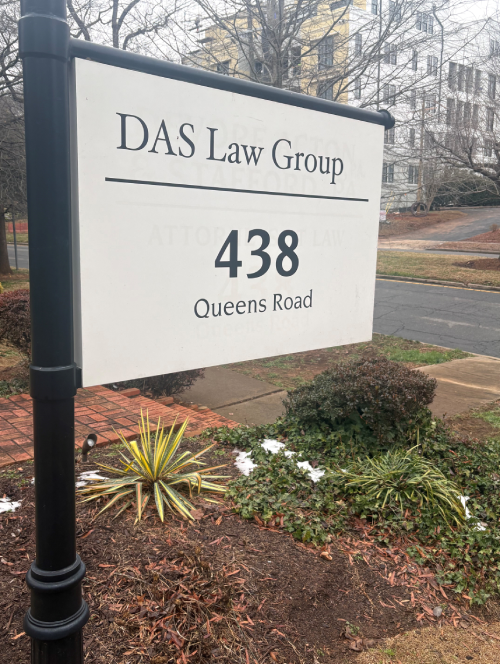
DAS Law Group
438 Queens Road
Charlotte, NC 28207
fax:
704-332-2825
Copyright © 2026 DAS Group, LLP. All rights reserved. Disclaimer | Site Map | Privacy Policy
*Images are obtained under license from Canva and other third-party stock image providers, with attribution included where required.
Digital Marketing By 