


Free Initial Consultation on Injury Cases 704-377-5242
What Is a Drainage Easement in North Carolina Eminent Domain?

A letter shows up from NCDOT or the city, and somewhere in the legal language sits the phrase drainage easement. Nobody explained what that means for the ditch behind your fence, or the retention pond they want to dig near your driveway.
In North Carolina, a drainage easement gives a government agency or utility the right to enter part of your land and manage stormwater there, permanently. That right comes with compensation, but the number in the government’s first letter is rarely the last word.
DAS Law Group has spent years on the other side of these letters, standing beside Charlotte property owners once the fine print gets complicated. A free consultation can tell you what your easement is actually worth before you sign anything.
What Exactly Is a Drainage Easement?
A drainage easement is a legal right that lets a government agency or utility use part of your property to move or manage stormwater, without taking ownership of that land. Think of it as a permission slip written into your deed. The government gets to dig ditches, lay pipe, grade a slope, or build a retention pond on a defined strip of your yard, and that permission runs with the land even after you sell.
You still own the ground underneath. You still pay the property taxes on it. But your right to build a shed there, plant a row of trees, or fence it off disappears the moment the easement is recorded. Most property owners learn this only after a right-of-way agent knocks on the door.
Permanent vs. Temporary Drainage Easements
Not every drainage easement works the same way, and the difference changes what you’re owed.
- A permanent drainage easement gives the condemning authority ongoing access to and use of the strip for as long as the drainage system exists. Because it lasts indefinitely, it typically carries the largest share of your compensation.
- A temporary construction easement lasts only through the build phase, often 12 to 18 months, and typically comes with less compensation because your land reverts fully to you afterward.
- A combined access and maintenance easement layers a right to re-enter for future repairs on top of either of the above. Property owners often miss this detail, so read for it specifically.
Read the plat and the easement language line by line before you sign, because the label on the document rarely tells the whole story on its own.
Why NCDOT and Local Governments Take Them in Charlotte
Road widening is a common eminent domain trigger. When the North Carolina Department of Transportation (NCDOT) adds a lane or rebuilds an intersection, the new pavement has to shed water somewhere, and that somewhere is often a neighbor’s side yard. Charlotte-Mecklenburg Storm Water Services runs a parallel track, taking easements for aging pipe hip replacement recall, culvert upsizing, and stream restoration work across the city and the surrounding towns it serves.
Mecklenburg County has grown fast, and its older drainage infrastructure was never built for the amount of pavement now sitting on top of it. That mismatch is likely to mean more easement requests, not fewer, in the years ahead. A project near the Sugar Creek or Little Sugar Creek corridors, for instance, might touch dozens of properties at once, each one getting its own version of the same letter.
What a Drainage Easement Does to Your Property’s Value
The easiest number to see is the square footage taken. The harder number, and the one worth fighting for, is what happens to everything you keep.
Appraisal Blind Spots
A government appraiser usually prices only the strip itself, multiplied by a per-square-foot rate. That approach skips the damage to your remaining property: a backyard that no longer drains the way it used to, a buildable lot that shrinks once the easement is carved out, or a pool or addition you can no longer add where you planned.
This gap between what the strip is worth and what the whole property loses is where a drainage easement attorney earns their fee, because it rarely shows up on the government’s own paperwork.
Flood Insurance and Lender Concerns
Lenders read a recorded drainage easement as a flag, and some tighten underwriting on the strength of it alone. Separately, if your property sits in a FEMA-mapped high-risk flood zone and you have a federally backed mortgage, your lender is required to make you carry flood insurance dispute. That requirement comes from FEMA’s flood maps, not from the easement itself — but it’s still worth checking your flood zone status if a drainage project is changing how water moves through your neighborhood.
Add up appraisal loss and insurance cost together, and a small strip of land can shrink a sale price by far more than its acreage suggests.
Are You Entitled to Compensation?
Yes. Under North Carolina’s Eminent Domain statute, Chapter 40A of the General Statutes, a property owner is owed just compensation any time the government takes an interest in land, and an easement counts as a taking even though you keep the deed. NCDOT projects follow a parallel process under Chapter 136, but the underlying promise is the same: you get paid for what you lose, not just for the dirt itself.
If a letter has already arrived, a drainage easement attorney can review the offer before the deadline on it expires.
Before You Sign Anything
A few steps protect you before ink hits paper:
- Get the plat and the exact easement language in writing, not just a verbal summary from the agent at your door.
- Hire an independent appraiser who accounts for damage to the remainder of the property, not only the strip being taken.
- Have the agreement reviewed before signing, since a recorded easement is difficult to undo once it’s on the deed.
Contact DAS Law Group before the response deadline on your letter passes. Once you sign, negotiating room narrows fast.
Frequently Asked Questions
Can I still build on my property if it has a drainage easement?
You can build outside the easement’s boundaries, but not inside them. The recorded plat marks the exact strip that’s off limits, so check it before you plan a shed, pool, or addition, and ask the surveyor to flag the line on the ground.
Can the government widen a drainage easement later without paying me again?
Usually not, unless the original agreement left room for expansion, which some do. Read the width and scope language closely before signing, because a broadly worded easement can let the agency come back years later at no extra cost to them.
Do I have to let workers onto my land whenever they want?
Most permanent easements include an access right for maintenance and repair, and that right typically doesn’t require advance notice. Ask specifically about notice requirements before you sign, since some agreements do include them.
How is drainage easement compensation calculated in North Carolina?
North Carolina law says you get whichever is bigger: the fair market value of the strip taken, or the drop in your whole property’s value caused by the taking. In practice, this second number usually includes both the value of the strip and any damage to what’s left. State law says you’re owed that full amount, not just the acreage price, though the first offer doesn’t always reflect that.
What happens if I refuse to sign a drainage easement agreement?
The government can file a condemnation action and take the easement anyway, depositing its estimate of just compensation with the court. You keep the right to contest that amount in court, so refusing to sign isn’t the same as giving up your claim to a fair number.
DAS Law Group: Your Charlotte Eminent Domain Law Firm
A drainage easement letter rarely gives you the full picture, and the deadline printed on it moves faster than most people expect. DAS Law Group has spent years reviewing NCDOT and municipal offers line by line, catching the remainder damage and insurance impact that get left out of the first number.
If a letter is sitting on your counter right now, contact our firm today, and let’s look at what your property is really worth before you sign anything.

request your consultation
* We encourage prospective clients not to use AI research or drafting software in submitting their intake, as that can lead to unintended rejection via our spam filter.
"*" indicates required fields
our location
call us now 704-377-5242
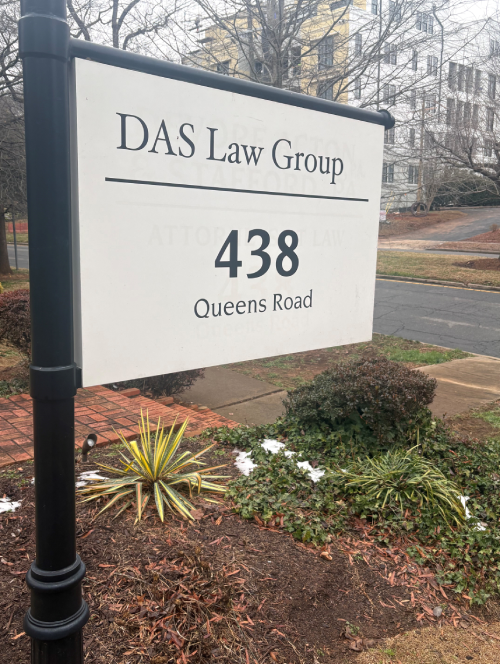
office location
DAS Law Group
438 Queens Road
Charlotte, NC 28207
fax:
704-332-2825
Copyright © 2026 DAS Group, LLP. All rights reserved. Disclaimer | Site Map | Privacy Policy
*Images are obtained under license from Canva and other third-party stock image providers, with attribution included where required.
Digital Marketing By 