


Free Initial Consultation on Injury Cases 704-377-5242
What Are Damages to the Remainder in a North Carolina Eminent Domain Case?

When the government acquires only a portion of your property through eminent domain, you may be entitled to more than compensation for the land that was taken. Property owners may be entitled to compensation for any reduction in the value of the remaining property. If you are dealing with a related case, you may be wondering, “What are damages to the remainder in a North Carolina eminent domain case?” Read on to learn how to pursue these damages.
When Can the Government Acquire Someone’s Private Property?
Whether you have property near Hanging Rock State Park, Smith Mountain Lake, or elsewhere in North Carolina, property rights are taken seriously in this state.
Both the United States Constitution and state laws allow the government to acquire private property through eminent domain when the acquisition serves a legitimate public use and the property owner receives fair compensation.
Common examples of eligible projects include highway expansions, bridge replacements, utility corridors, schools, parks, and infrastructure improvements that benefit the public. In many cases, the condemning authority will first attempt to negotiate a voluntary purchase before filing a condemnation action.
If an agreement cannot be reached, the matter may proceed through the courts, where property owners have the right to challenge the amount of compensation and seek payment for the fair market value of the property.
How Can I Be Compensated for the Reduced Value of the Remaining Land
If the government acquires only part of your property, you may be entitled to compensation for both the land that was taken and the reduced value of the property that remains. When portions of a full tract of land are taken, that can harm the overall value of the land, especially when eminent domain leaves the remaining property with reduced access, diminished usability, and other negative conditions that affect land value.
These losses are often called “damages to the remainder,” and they are determined by comparing the fair market value of the entire property before the eminent domain with the value of the remaining property. Under N.C. Gen. Stat. § 136-112, this “before and after” approach forms the basis for calculating just compensation.
The North Carolina Department of Transportation’s Right-of-Way Appraisal Guide further instructs appraisers to evaluate how the completed project affects the remaining property. In a state where the average acre of land is valued at $5,470, and the average home value is $340,430, compensation for reduced value of land can more fully account for the financial losses someone suffers from having their property acquired by the government.
Why You Should Hire an Eminent Domain Lawyer
Eminent domain claims and property cases are complex, as reflected in a June 2026 case involving a blueberry farmer in Hampstead who alleged that NCDOT employees entered his property, demolished a shed, and buried construction debris without his permission. The property owner claimed $843,000 in damages, saying that the unlawful digging and reduction in value to his land from the $500 million Hampstead Bypass project warranted compensation.
If you have concerns about being treated fairly in an eminent domain case, you have the right to hire an eminent domain lawyer to manage your case. North Carolina eminent domain laws provide protections for property owners, and an eminent domain attorney can take steps to protect your right to fair eminent domain compensation.
When you partner with DAS Law Group for your eminent domain case, you benefit from our more than 100 years of combined experience managing these types of cases. Our firm relies on state-of-the-art legal technology to provide efficient and focused legal services for the clients we serve.
FAQs
How Are Damages to the Remainder Calculated in North Carolina?
When the government takes a portion of someone’s land, damages to the remainder are generally calculated using the “before and after” approach. This involves an examination of the fair market value of land before and after the project. If the remaining property has decreased in value because of reduced access, loss of usable land, or other negative impacts, the owner may be entitled to compensation for the difference.
What Are Severance Damages in North Carolina?
Severance damages refer to the loss in value suffered by a portion of a property that remains after only part of that land was acquired through eminent domain. These damages may result from reduced access, irregular lot shape, increased noise, changes in grade, and other project-related impacts that diminish the value or usefulness of the remaining land.
Can I Recover Damages if Only Part of My Property Is Taken?
Yes. If only part of your land is acquired by the government, you may be eligible for compensation for the loss of the remaining property’s value. North Carolina law recognizes that a partial taking of land can reduce the value of what is left. Even when the remaining land is not physically acquired, it can suffer from reduced property values. Support from an attorney can account for those losses.
How Is Fair Market Value Determined in a North Carolina Eminent Domain Case?
Fair market value is based on the price that someone is willing to buy it for in an open market. Appraisers consider what a similar property would be valued at when assessing monetary amounts for properties. Factors like location, size, zoning, improvements, and other variables can all play a role in shaping the final value of a tract of land.
Facing Land Acquisition by the Government? Protect Your Rights by Contacting DAS Law Group
If you are a property owner in North Carolina who is concerned about protecting the value of your land following an acquisition by the government, DAS Law Group can help. Our legal team focuses on civil litigation cases, and we do not hesitate to take cases to court or trial when necessary. We can take the time to carefully review your case before moving forward with the right strategy.
We employ state-of-the-art legal technology that can help guide your case toward a favorable conclusion. With more than 100 years of combined legal experience, we understand the steps that are necessary to protect your property rights and interests from start to finish. Take the first step by contacting our office to schedule your initial consultation so we can provide you with the results-driven legal support your case deserves.

request your consultation
* We encourage prospective clients not to use AI research or drafting software in submitting their intake, as that can lead to unintended rejection via our spam filter.
"*" indicates required fields
our location
call us now 704-377-5242
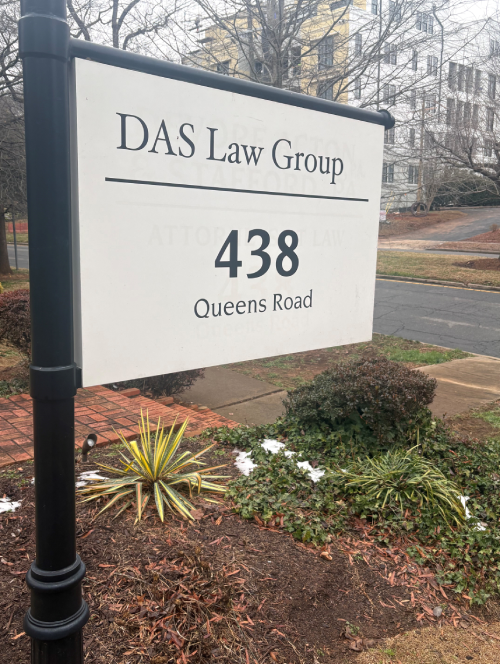
office location
DAS Law Group
438 Queens Road
Charlotte, NC 28207
fax:
704-332-2825
Copyright © 2026 DAS Group, LLP. All rights reserved. Disclaimer | Site Map | Privacy Policy
*Images are obtained under license from Canva and other third-party stock image providers, with attribution included where required.
Digital Marketing By 