


Free Initial Consultation on Injury Cases 704-377-5242
Can North Carolina Take Private Property for Development? 2026 Guide

North Carolina allows certain condemnations that end up benefiting private development, but the authority to take a specific property depends on who is condemning it, the project’s purpose, and the legal requirements that apply.
The lawfulness of a taking is a separate question from the price, and the answer can change the outcome.
At DAS Law Group, P.A., we can examine proposed takings, identify potential legal challenges, and explain your options before you agree to a price or respond to a condemnation notice.
Key Takeaways
- North Carolina permits certain eminent domain takings that may ultimately benefit private development, but the law limits who can condemn property and for what purposes.
- Local governments generally cannot condemn property for economic redevelopment unless the specific parcel qualifies as blighted under applicable law.
- Utilities, railroads, and certain pipeline and communications companies may exercise eminent domain for authorized infrastructure projects.
- Property owners can challenge a condemnor’s legal authority and dispute the compensation offered.
- A proposed 2025 constitutional amendment on eminent domain did not appear on the November 2026 statewide ballot.
Can North Carolina Use Eminent Domain for Private Development?
Yes, under specific circumstances. Chapter 40A of the North Carolina General Statutes lists the public bodies, private entities, and other condemnors that may acquire property through eminent domain, and it limits each of them to purposes the law authorizes.
The statute uses the phrase “public use or benefit,” which can reach beyond property the government owns or occupies. A condemnation tied to infrastructure or redevelopment can therefore end up benefiting a private business or developer.
No company can force a sale of land because a commercial project would be profitable. A private developer cannot condemn property to build a shopping center, apartment complex, or office development. The condemnor must have legal authority to take the property, and the taking must fall within a purpose the law authorizes.
The first step is to identify who is behind the project and which statute the condemnor relies on. That answer tells us whether a challenge may be available.
How Kelo v. City of New London Shaped North Carolina Law
The U.S. Supreme Court’s 2005 decision in Kelo v. City of New London remains central to the debate over eminent domain and private development. In a 5-4 ruling, the Court held that a taking meant to promote economic development can satisfy the federal Constitution’s public-use requirement, even when the property later passes from one private owner to another.
The decision prompted states to consider stronger protections for property owners. North Carolina did not adopt a comprehensive constitutional amendment closing the door on every taking connected to private economic development. State lawmakers did, however, limit redevelopment condemnations.
A 2025 proposal sought to amend the North Carolina Constitution to require a public use, rather than the broader “public use or benefit” standard, and to address jury trials on compensation. The proposal did not reach voters.
The three constitutional questions on the November 3, 2026 statewide ballot do not include an eminent domain amendment. Property owners’ rights therefore remain governed by the existing constitutional and statutory framework.
Who Has Eminent Domain Authority in North Carolina?
North Carolina law recognizes three categories of condemnors, and the statutes limit the authority of each.
- Private condemnors may include railroads, power companies, and certain pipeline or communications companies. Their authority covers specified infrastructure, such as authorized utility easement facilities, railroads, and related projects. It does not give every private corporation the right to acquire land against an owner’s wishes.
- Local public condemnors, including cities and counties, may acquire property for authorized public projects such as roads, water systems, and parks.
- Other public condemnors, including certain housing authorities, redevelopment commissions, and regional transit authorities, may exercise eminent domain under the statutes that govern their activities.
The category determines the legal requirements. A utility seeking an easement for an authorized project follows different rules from a city seeking property within a redevelopment area, and the condemnor must establish that it has authority for the particular taking.
Public Use, Redevelopment, and Blighted Property
After Kelo, North Carolina restricted the use of eminent domain for economic redevelopment. In 2006, the General Assembly enacted Session Law 2006-224, which modified the Urban Redevelopment Law to limit condemnations in redevelopment areas to parcels that meet the statutory definition of blight.
Age or a higher value after redevelopment does not make a property blighted. The law requires a formal finding by the planning commission about conditions such as serious disrepair, unsafe or overcrowded conditions, or fire hazards. Those conditions must meet the statutory criteria, including the required link to public health and safety.
That requirement separates lawful redevelopment from a taking that exceeds the government’s authority. We review whether a parcel actually meets the legal definition of blight and whether the commission made the required finding properly.
For owners facing a redevelopment proposal, the official findings and the legal basis for the condemnation deserve as much scrutiny as the property’s market value.
Compensation and Your Right to Challenge a Taking
A condemnor with authority to acquire property still has to pay just compensation, and the amount offered is a separate issue. North Carolina law sets procedures for determining just compensation, and an initial offer does not establish what an owner should receive.
The North Carolina Supreme Court has held that the state constitution does not independently guarantee a jury trial on compensation in eminent domain cases. State statutes, however, authorize a jury to determine compensation in the applicable proceedings.
The process generally separates two questions. A judge decides legal issues, including whether the condemnor had authority to take the property. A jury may decide the amount of compensation when the statutory procedures allow a jury trial.
Compensation is generally measured by fair market value under the applicable valuation rules, without changes in value caused by the proposed project or the threat of condemnation itself.
Depending on the circumstances and the governing law, an owner may also recover specified costs, appraisal expenses, or attorney fees.
We review the appraisal, the scope of the taking, and any available legal objections to determine whether the valuation accounts for the property and the interests actually being acquired. That review gives you a basis for deciding whether to accept an offer.
What to Do When a Development Project Targets Your Property
A condemnation notice, appraisal request, or lawsuit can raise questions about rights and deadlines that are easier to address early.
We examine whether the condemnor has statutory authority, whether the proposed purpose is legally permitted, and whether the condemnor followed the required procedures. When a redevelopment project relies on a blight determination, we also review the basis for that finding.
DAS Law Group has developed arguments in more than 75 appellate cases in the North Carolina Court of Appeals, the North Carolina Supreme Court, and the Fourth Circuit. That appellate experience applies when a condemnation dispute turns on statutory authority, procedural compliance, or another legal issue that requires judicial review.
Frequently Asked Questions
How much notice must a condemnor provide before filing a lawsuit?
A city, county, or other public condemnor generally must send written notice at least 30 days before filing suit. The notice identifies the property, explains the purpose of the taking, states the condemnor’s estimate of just compensation, and gives the planned filing date. Requirements and deadlines depend on the type of proceeding, so have the notice reviewed carefully.
What if I miss the deadline to answer a condemnation complaint?
In a Chapter 40A proceeding that involves a declaration of taking, an owner typically has 120 days after service to file an answer. An owner who misses the deadline generally gives up the right to dispute compensation, and the court treats the deposited amount as just compensation. Have the complaint reviewed promptly to confirm the deadline that applies to your case.
Can I challenge the taking itself instead of disputing the price?
Yes. A condemnor’s legal authority to take property is a separate question from the amount of compensation. A judge decides issues other than valuation, and a jury can decide compensation under the applicable statutory procedure.
Can a condemnor enter my property before filing a lawsuit?
North Carolina law allows a condemnor to enter land, but not structures, to conduct surveys, borings, examinations, and appraisals before it files a condemnation action or deposits funds. The condemnor must give 30 days’ written notice and reimburse any damage the entry causes. An inspection does not by itself mean the condemnor has taken the property.
Discuss Your North Carolina Eminent Domain Concerns With DAS Law Group
A proposed condemnation leaves three questions open: whether the project qualifies under North Carolina law, whether the condemnor followed the required process eminent domain, and whether the offer reflects the property being taken.
DAS Law Group, P.A., can review the documents, assess potential challenges, and explain the options available under the applicable law. Request a consultation to have the notice, the appraisal, and the offer checked against the statutes that apply before you respond.

request your consultation
* We encourage prospective clients not to use AI research or drafting software in submitting their intake, as that can lead to unintended rejection via our spam filter.
"*" indicates required fields
our location
call us now 704-377-5242
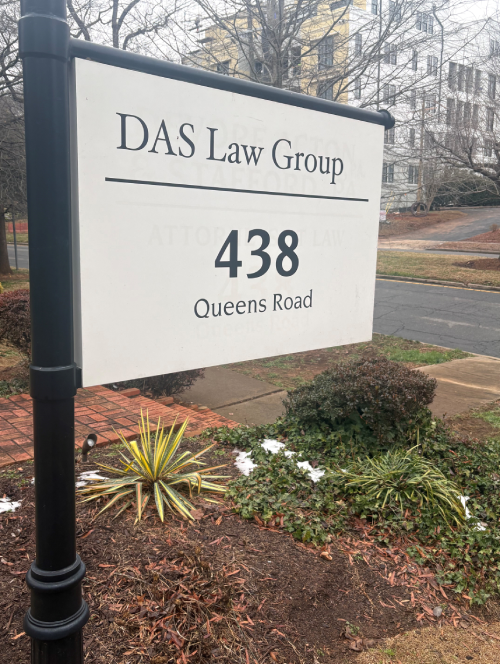
office location
DAS Law Group
438 Queens Road
Charlotte, NC 28207
fax:
704-332-2825
Copyright © 2026 DAS Group, LLP. All rights reserved. Disclaimer | Site Map | Privacy Policy
*Images are obtained under license from Canva and other third-party stock image providers, with attribution included where required.
Digital Marketing By 