


Free Initial Consultation on Injury Cases 704-377-5242
What Is Public Use in North Carolina Eminent Domain?
A government agency or authorized private company cannot take North Carolina property for the sake of convenience.
Eminent domain must serve a legally permitted public use or benefit, and the condemning party must hold statutory authority to take the land.
That limit gives property owners a basis to question whether a proposed taking is lawful. When a condemnation notice arrives, three things call for review: the project’s stated purpose, the authority behind it, and the amount of land involved.
We help North Carolina property owners evaluate eminent domain disputes and determine whether a challenge may be warranted.
Request a consultation to discuss the proposed taking and how North Carolina law applies to your property.
Key Takeaways
- North Carolina General Statutes § 40A-3 limits condemnation to authorized purposes that serve a public use or benefit.
- Different condemning entities hold different statutory powers, so the identity of the condemnor matters.
- A condemnor may face limits when it seeks more land than a project requires.
- Private economic development alone does not authorize a proposed taking in North Carolina.
- Property owners may challenge a taking’s legality, its scope, or the compensation offered.
What Qualifies as Public Use Under North Carolina Law?
North Carolina law restricts when the government or an authorized company can acquire private property without the owner’s consent.
Article I, Section 19 of the North Carolina Constitution protects property rights, and N.C. Gen. Stat. § 40A-3 identifies the authorized condemnors and purposes under Chapter 40A.
Public use can include roads, water and sewer systems, schools, parks, and other authorized public infrastructure. A project does not need to give every resident direct access to benefit the public. A water reservoir, for example, can serve a community even though residents cannot freely enter the property.
The proposed taking must also fit the legal authority granted to the entity pursuing it. General convenience or commercial advantage does not automatically make a project a lawful public use.
We examine the applicable statute, the project’s actual purpose, and the circumstances surrounding the acquisition.
Who Has the Authority to Condemn Property in North Carolina?
Eminent domain is not available to every business or government body. North Carolina law identifies which entities may exercise condemnation powers and limits those powers to specified purposes.
Authorized condemnors may include:
- Private entities, such as certain railroad, pipeline, and utility companies, exercising statutory authority for qualifying infrastructure projects.
- Local government bodies, including municipalities, counties, and school boards, acquiring property for authorized public projects.
- Special-purpose public authorities, such as certain housing, hospital negligence, water, and sewer authorities, acting within the powers granted by law.
Highway projects follow a separate statutory framework. The North Carolina Department of Transportation generally exercises condemnation authority under Chapter 136 rather than relying solely on the procedures and authorizations in Chapter 40A.
The condemnor’s identity can determine whether a taking is permitted. A utility company cannot rely on the same broad assumptions as a city, and a public agency must still act within the authority granted to it.
Before accepting the stated justification for a condemnation, identify the entity seeking your property and the statute it relies on.
How North Carolina Courts Evaluate a Proposed Taking
A condemning authority must have a lawful basis for acquiring property, and the amount of land it takes can also become an issue.
In a dispute involving the Piedmont Triad Regional Water Authority, the North Carolina Supreme Court considered a reservoir project that required approximately 48 acres of a 145-acre golf course. The authority sought to acquire the entire tract, which raised the question of whether it could lawfully condemn the additional land.
The case illustrates a limit on eminent domain. Under N.C. Gen. Stat. § 40A-7, excess condemnation is subject to statutory restrictions, including considerations involving the value of the remaining property. A condemnor cannot assume that acquiring an entire parcel is permissible because a smaller portion is needed for the project.
For property owners, the practical question is whether the authorized project and the applicable legal standards justify the land sought. If the proposed acquisition extends beyond what the project requires, a review of the property’s remaining value and the condemnor’s explanation may reveal grounds for a challenge.
Public Use Versus Private Economic Development
Eminent domain disputes often turn on the line between public benefit and private commercial gain.
In Kelo v. City of New London (2005), the U.S. Supreme Court upheld, under the federal Constitution, a taking connected to an economic redevelopment plan. North Carolina responded in 2006 with statutory restrictions that narrowed the purposes for which condemnors may acquire private property.
Under North Carolina law, a project does not qualify for condemnation merely because it could generate jobs, increase tax revenue, or improve a private developer’s financial position. The taking must fall within the authority and purposes permitted by the applicable state statutes.
The question arises when a proposed development transfers property to a private business or benefits a commercial project. The specific statutory authority and facts control the answer, because the presence of private interests does not resolve every case by itself.
What Happens After a Condemnation Begins?
Once an authorized entity proceeds with a taking, the legal process eminent domain can move quickly. Property owners should watch notices, court filings, and response deadlines closely.
The process may involve the following steps:
- Notice of the proposed acquisition. The condemnor provides information about the project and the property it intends to acquire, as required by the applicable law.
- Court filings. The condemnor starts the proceeding by filing a complaint and related documents.
- Transfer of property rights. In qualifying quick-take proceedings, including certain NCDOT acquisitions, title or possession may transfer once the statutory filing and deposit requirements are met.
- Resolution of disputed issues. The owner may have grounds to contest the taking’s legality, its scope, or the amount of compensation, subject to the governing procedures and deadlines.
A quick-take procedure changes the timing and mechanics lien of acquiring property. It does not eliminate the public use requirement or the need for lawful condemnation authority.
The public use issue and the compensation dispute are also distinct. Even when a taking proceeds, disagreements about property value and damage to the remaining land may require separate resolution.
How to Challenge a Taking That Lacks a Public Purpose
If you question whether a proposed condemnation serves a legally authorized purpose, start with the documents that identify the project and explain the need for your property.
These steps can help preserve relevant information:
- Keep every condemnation notice, court filing, appraisal, map, and property survey.
- Identify the statute the condemning entity cites and compare its stated purpose with the authority that statute grants.
- Review how much land the project requires and whether the proposed acquisition extends beyond that area.
- Get legal advice promptly so you understand the applicable deadlines and available objections.
A challenge may focus on the condemnor’s lack of authority, the absence of an authorized public purpose, or an acquisition that exceeds lawful limits. The best approach depends on the facts and procedural posture of the case.
Our eminent domain attorneys can review the record and explain which arguments may be available.
Frequently Asked Questions
Does quick-take eliminate the public use requirement?
No. Quick-take procedures can allow an authorized condemnor to obtain property rights before a final compensation determination, but they do not remove the requirement for lawful condemnation authority. The procedures available to challenge a taking depend on the statute involved and the stage of the case.
What if I miss the deadline to respond to a condemnation complaint?
Missing a response deadline can limit your ability to contest issues in the proceeding and may expose you to an adverse judgment. The deadline and its consequences depend on the governing statute and court rules. Review the papers you received and consult an attorney promptly instead of assuming you can respond later.
Does just compensation equal fair market value?
Fair market value is an important part of determining compensation, but it may not capture every compensable loss. When a condemnor acquires only part of a property, damage to the remaining property may also be relevant under the applicable law. An owner can review the condemnor’s appraisal and challenge the valuation through the proper procedures.
Can a private pipeline company condemn my land?
Certain pipeline companies hold eminent domain authority under North Carolina law, but statutory requirements limit that power. Whether a particular company can condemn a particular property depends on its legal authority, the type of project, and its compliance with applicable requirements.
Protect Your Property Rights With DAS Law Group, P.A.
A questionable public purpose, or an acquisition that covers more land than the project appears to need, gives a property owner something concrete to examine.
North Carolina law places limits on eminent domain, and identifying those limits can help you decide whether to challenge the taking, negotiate compensation, or pursue both where permitted.
Fred W. DeVore, III has practiced law in Charlotte since 1982. DAS Law Group, P.A. works with construction and property clients in the Charlotte area, including Mecklenburg County.
If a government agency or authorized private entity is seeking your property, contact DAS Law Group, P.A. We can review the condemnor’s authority, the stated purpose, and the scope of the taking, and explain the steps available to protect your interests.

request your consultation
* We encourage prospective clients not to use AI research or drafting software in submitting their intake, as that can lead to unintended rejection via our spam filter.
"*" indicates required fields
our location
call us now 704-377-5242
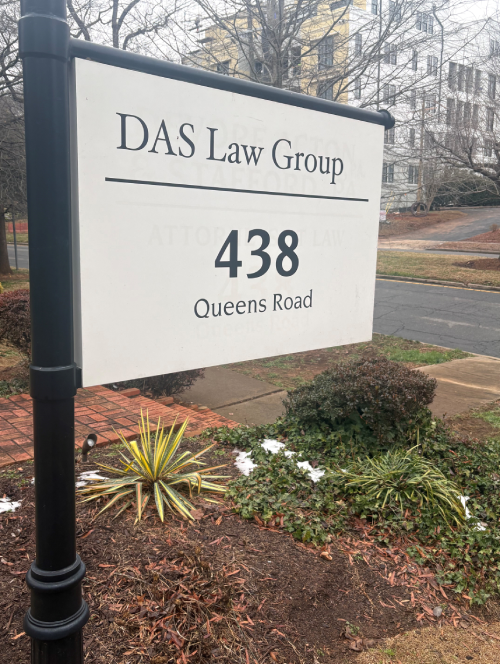
office location
DAS Law Group
438 Queens Road
Charlotte, NC 28207
fax:
704-332-2825
Copyright © 2026 DAS Group, LLP. All rights reserved. Disclaimer | Site Map | Privacy Policy
*Images are obtained under license from Canva and other third-party stock image providers, with attribution included where required.
Digital Marketing By 